Social Services
A Man Called OveSocial Services is the authority whose investigation results in a decision to place Rune in a care facility, against the wishes of his wife, Anita. The dispute turns on who has the right to decide what care Rune needs: an investigation team acting through an official process, or the people closest to him who believe he should remain at home. As the decision approaches enforcement, Ove comes to Anita’s aid, and the organization’s role becomes the focus of a wider conflict over care, autonomy, and responsibility.
Role and Decision-Making
The novel presents Social Services through its investigation and the officials who communicate and act on its findings. A man in a white shirt tells Ove that the authority is taking Rune into care and insists that the decision belongs to the investigation team, not to Anita. The account does not establish the organization’s wider structure or the full criteria used in its assessment; it shows its authority at work through a specific case and the officials who represent it.
The decision follows an investigation that, according to Jimmy’s explanation, began after Anita applied for more help at home. Social Services investigated whether she could continue caring for Rune, then concluded that she could not manage and that Rune should be placed in an institution. Jimmy says Anita tried to withdraw her request for home help after learning what the investigation might mean, but was told that the process could no longer be stopped because a decision had been made. His account is relayed in conversation rather than shown as a complete official record, but it clarifies why Anita regards the process as having moved beyond her control.
The Dispute Over Home Care
Rune has Alzheimer’s disease and uses a wheelchair. Anita is also physically vulnerable: she has had a hip replacement, and Sonja had explained that Anita was experiencing the first stage of multiple sclerosis. These circumstances frame the practical difficulty of caring for Rune at home, but they do not make Anita’s opposition to institutional care any less central. She tells Ove that Social Services wants to take her husband away and says she believes he will die if he is put in a home. Her plea conveys both her assessment of Rune’s needs and the personal cost she anticipates from separation.
The narrative does not provide Social Services’ detailed findings, nor does it show the authority offering a final account of its reasoning beyond the claim that the investigation team has decided. Instead, its position is conveyed through the official’s repeated insistence that Anita cannot reverse the process. That gap matters: readers see a decision presented as administratively settled, while Anita’s view of what Rune needs remains immediate and intimate. The disagreement is therefore not simply between care and no care. It is between an institutional judgment about whether home care is manageable and a wife’s conviction that keeping her husband at home is essential to his well-being.
Enforcement and Neighbors’ Response
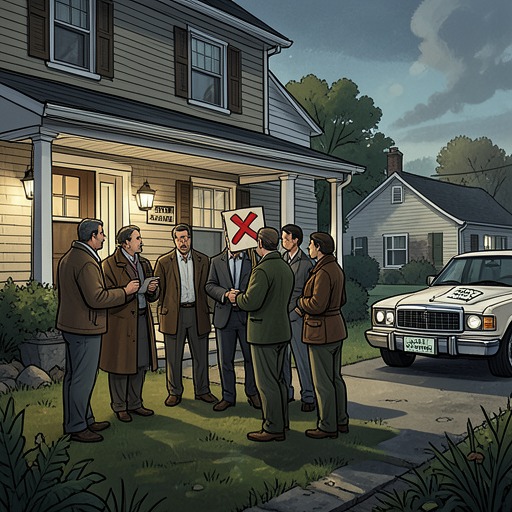
The conflict escalates when an official arrives in a Škoda and explains to Ove that Rune is being taken into care. Ove challenges the authority’s right to enter the residential area and asks whether Anita’s opposition counts. The official answers that the investigation team, rather than Anita, makes the decision. When Ove later sees Anita, she says Social Services has come again and repeats that they want Rune removed because they consider her unable to care for him. Her account shows that the decision is not an abstract possibility: officials have returned, and the prospect of separation is approaching.
Jimmy later gives Ove the history of Anita’s request for additional home help and the two-year investigation. Ove had assumed that an appeal would delay action for years, reflecting his belief that bureaucratic decisions move slowly. When Jimmy tells him Anita has already been writing letters for two years and that Social Services is now coming to collect Rune, Ove realizes that he misunderstood how little time remains. He asks to see the authorities’ papers, then goes to Anita’s home to confront the impending action. The sequence makes the case’s procedural history consequential: the time Anita has spent trying to resist the decision has not created the delay Ove expected.
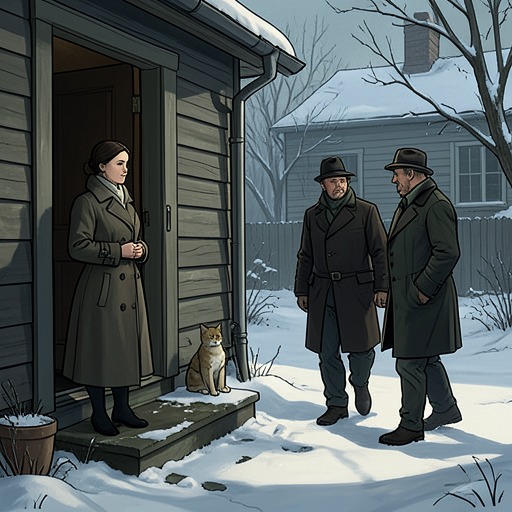
When the official returns with three nurses, he presents the decision as final and says Anita has had two years to resolve matters through the easier course. Anita stands at the entrance and refuses to let him pass. When he questions who will care for Rune, she answers that she will. Ove then adds that he will help too. The scene does not establish that Social Services withdraws its decision or that the placement is formally overturned; it establishes that the attempted enforcement meets resistance from Anita and practical support from Ove.
Narrative Significance
Social Services functions in this storyline as a source of institutional power, but the novel keeps its portrait tied to the particular decision and the encounters surrounding it. The authority’s process recognizes Anita’s request for help as the beginning of an investigation, yet, as Jimmy reports it, her later wish to withdraw that request cannot halt the process. By the time officials arrive, the distinction between having asked for help and having consented to the outcome has become the heart of the conflict.
The dispute also connects care to concrete capacity rather than sentiment alone. Rune’s illness and wheelchair use, Anita’s own health problems, and the prospect of home assistance all bear on the question of whether care can continue at home. Still, the narrative gives weight to the people who know Rune in daily life: Anita refuses to treat the institution as an acceptable substitute, and Ove responds by offering help instead of leaving her to face the officials alone. Social Services’ decision thus becomes the occasion for Ove to move from recognizing Anita’s distress to taking responsibility alongside her. Its role in the story is defined not by a broad account of public welfare, but by the collision between an official assessment and a household’s insistence on remaining together.